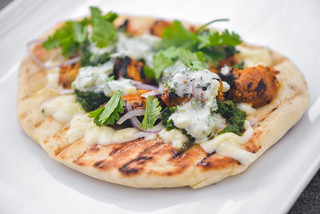
Tavern-style Pizza with Sausage and Red Onion

It was my third trip to Chicago that I was introduced to Pequod's, and I have not gone to any other pizza place in the city ever since that fateful day. Prior to Pequod's I was into trying various deep dish-style pizzeria's on each trip, so I've eaten at other spots, but being dedicated to single one since then may have been a folly because I only realized recently that it deprived me of another Chicago pizza that would be more to my liking—Tavern-style. I've seen this ultra-thin and crispy pizza style before, but it wasn't until Kenji's recipe showed up in my feed that I paid attention and had an easily accessible path to follow. So here's my first try at Chicago tavern-style pizza, but me being me, I did these up outdoors on the KettlePizza instead of in the oven.

My love for thin crust pies really peaked when my friend Adam was doing pop-ups under the name of Margot's Pizza probably 12-13 years ago now. At that moment, I learned more about the bar pie process he was emulating from joints such as Colony Grill in Connecticut. After trying out that recipe and process, it's been my go-to for thin crust until this tavern-style pie, whose primary is difference is in the dough.

This is a low-hydration and low yeast dough in order to get to that cracker-like crust. It took two stints of kneading, with a rest between them, to get a smooth and somewhat glossy character to the dough, at which time I divided it up and formed each piece into a ball. Like with just about all of my pizza doughs, I let this one ferment in the fridge for a few days, but since the yeast content was low, there wasn't all that much rising during that time.

Since I was a novice to tavern pies, I continued with the exact recipe Kenji had laid out for the sauce as well. Like a New York-style sauce, this one was also not baked, which meant it was quick and simple to put together—I just gave all the ingredients a spin in the blender. With more tomato paste and dried seasoning, this was a thicker and more deeply flavored sauce when compare to the New York version I'm more used to.

The night before I was going to cook the pizza, which was three days after I made the dough, I took the dough out of the fridge and let it rest for about an hour. I then got to the process of rolling it out as thin as I could. The original recipe said 14-inch rounds, and I felt like I was reaching a limit at around 12-inches, but kept at it and sure enough got every piece to 14-inches in diameter. I set each stretched piece of dough on a parchment-lined platter and left them out overnight to cure. This felt odd having never done any dough recipe that calls for this previously, but I put my faith in the process.

I was cooking for a crowd this day and made six pies, but made double on the two I felt most represented Chicago—giardiniera plus sausage and onions. For the sausage and onion pies I picked up premade, uncased, mild Italian sausage and sliced up half a red onion very thinly on a mandoline. Beyond that, I used low-moisture whole milk mozzarella and finely grated Pecorino romano for the cheese.

It was then time to build the pies. The curing process left the dough pretty tough and leathery, and the edges were somewhat dried out and that made me worry I may have overdone the cure. The center of the dough had puffed up a little, but that flattened out after I punctured the dough all over with the tines of a fork.

I then spread a layer of sauce almost to the edge, but found after cooking that going completely to the edge would have been ever better because any piece of exposed dough ended up blackening during cooking. Like with bar pies, cheese to the edge is desired to get some melting off the pizza, which then crisps up when hitting the hot pizza stone. I dotted the pie with pieces of raw sausage and put on a lot of onions knowing that they would shrink up quite a bit during cooking.

Similar to New York pizza or bar pies, an oven around 550°F is the best temperature for cooking. The KettlePizza excels at getting super hot, so to keep it at a lower temperature point I used a bit less charcoal than I normally would and no wood logs. This kept it in the 550-600°F range for over 30 minutes, which cooked each pie in roughly 7 minutes. I let each pizza cook until the cheese was melted, bubbly, and starting to brown in spots. I had to rotate the pies every now and then for even cooking, and while I was pretty watchful, I definitely charred a couple pies by leaving them too close to the coals for too long. Once the pies were done, I cut them in the required square fashion and served.

These pies were more unique from all other pizzas I've had in the past. That feeling was all thanks to the crust which had an ultra crisp, cracker like quality without tasting dry either. The edges that I worried dried out too much ended up being the best parts with the most crunch and the right amount of char to give it more flavor than the center pieces that were little thicker and less crackling crisp. The long cooking time meant the cheese was extra tasty thanks to some caramelization action and also some melding with sausage fat as that rendered and cooked. I feel like I probably did a pretty decent job with these pies at home, but I need to get back to Chicago to really know how well I'm faring first hand. Of course, that will be in addition to Pequod's because no matter how much I liked these tavern-style pies, Pequod's will always be a pizza pinnacle for me.